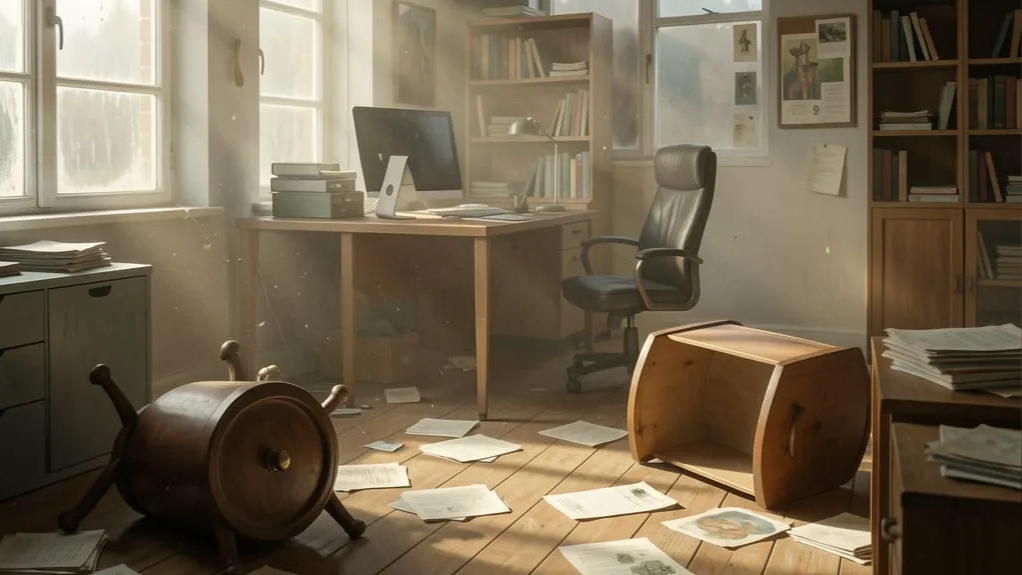
I'm back
A burglar broke into our house a few days after Christmas.
Even writing that sentence still feels strange. The holidays had barely settled. Wrapping paper still lingered in the corners of the house. The kids had new toys spread across the floor. Then suddenly, all of it shifted. Drawers emptied. Shelves cleared. Silence where familiar things used to sit.
They took every computer in the house. Mine. My wife’s. The kids’ machines, too. They took the kids’ piggy banks. Pokémon cards collected over the years vanished into a bag carried by someone who probably saw them as quick cash and nothing more. They took our digital lives hostage in the messiest way possible.
And then came the part that hit me harder than I expected.
They took my old NES.
The same Nintendo I had held onto since 1989. Grey plastic. Slightly yellowed edges. Controllers with cords that always tangled into impossible knots. A machine that survived moves, apartments, breakups, career changes, and adulthood itself. I still had the games, too. Carefully stored. Tiny pieces of memory disguised as cartridges.
That one hurt.
Not in a rational way. Not in a “this is financially devastating” way. It felt personal. Like someone had reached backward through time and stolen fragments of childhood directly from the shelf.
People talk about burglary in terms of objects. Insurance lists. Police reports. Serial numbers. That is practical, and necessary, but incomplete. What really disappears is continuity. The small invisible thread connecting your routines and memories together.
My workspace vanished overnight. I wrote on the keyboard every morning. My notes. Half-finished drafts. Weird folders filled with article ideas I swore I would organize “later.” Years of digital clutter that somehow formed a creative habitat.
Gone.
Some backups survived. Some did not. A painful amount lived only locally, sitting in folders that felt temporary until they suddenly became irreplaceable. Every unfinished blog post disappeared. Every rough sketch. Every abandoned intro paragraph is waiting for another attempt.
For months, I could not write.
Not just practically. Emotionally.
I tried opening blank documents on borrowed hardware, and the spark was gone. The rituals had shattered. Writing had always depended on small comforts. Familiar keys. Familiar screens. The quiet feeling of stepping into a space built for thinking. After the break-in, even opening a laptop felt invasive, like touching the outline of something missing.
The strange part? The technical loss was solvable. Hardware gets replaced. Accounts get recovered. Passwords reset. The real damage sat somewhere softer and harder to explain.
Violation has inertia.
You start noticing it in odd places. A sound outside at night. The absence of objects your brain still expects to see. Walking past the shelf where the Nintendo used to sit, and feeling a tiny mental stutter. Like a corrupted texture in a video game world.
The kids handled it better than I expected. Kids often do. They mourn deeply, then continue at an impressive pace. Adults linger. We attach stories to objects. Layers of identity.
I kept thinking about the NES. Not just the console itself, but what it represented. It was proof that some things could survive decades unchanged. Then one random stranger erased that illusion in under ten minutes.
For a while, I stopped caring about digital spaces entirely. Blogging felt pointless. Writing online suddenly seemed fragile, temporary, easy to lose. I almost completely disconnected from the habit.
Five months passed.
And slowly, quietly, something returned.
Not motivation exactly. More like gravitational pull.
Ideas started piling up again during walks, late nights, and random conversations. Half-formed sentences returned while making coffee. I caught myself mentally drafting intros again. That old itch resurfaced.
So I rebuilt.
Not perfectly. Not completely. Some drafts are gone forever. Some files will never come back. The setup is different now, too. New hardware. New routines. New backup systems with slightly paranoid levels of redundancy.
Still, rebuilding taught me something unexpected.
Creative work was never stored in the machines themselves.
The tools mattered. The environment mattered. Losing them hurt deeply. Yet the instinct to create survived underneath the wreckage like an old server quietly humming back to life after a blackout.
There is a strange cultural habit online where people frame recovery as cinematic. Heroic comeback stories. Triumphant music swelling in the background. Real recovery feels less dramatic. It looks like opening a document after months away and writing two decent paragraphs. Then doing it again the next day.
And the next.
The truth is, the burglar took almost everything connected to my digital life. The machines. The workspace. Years of accumulated comfort. They even took a thirty-six-year-old Nintendo console that somehow still mattered far more than it should.
What they did not take was the part that wanted to make things in the first place.
That part just needed time.
So, after five months, I’m back.