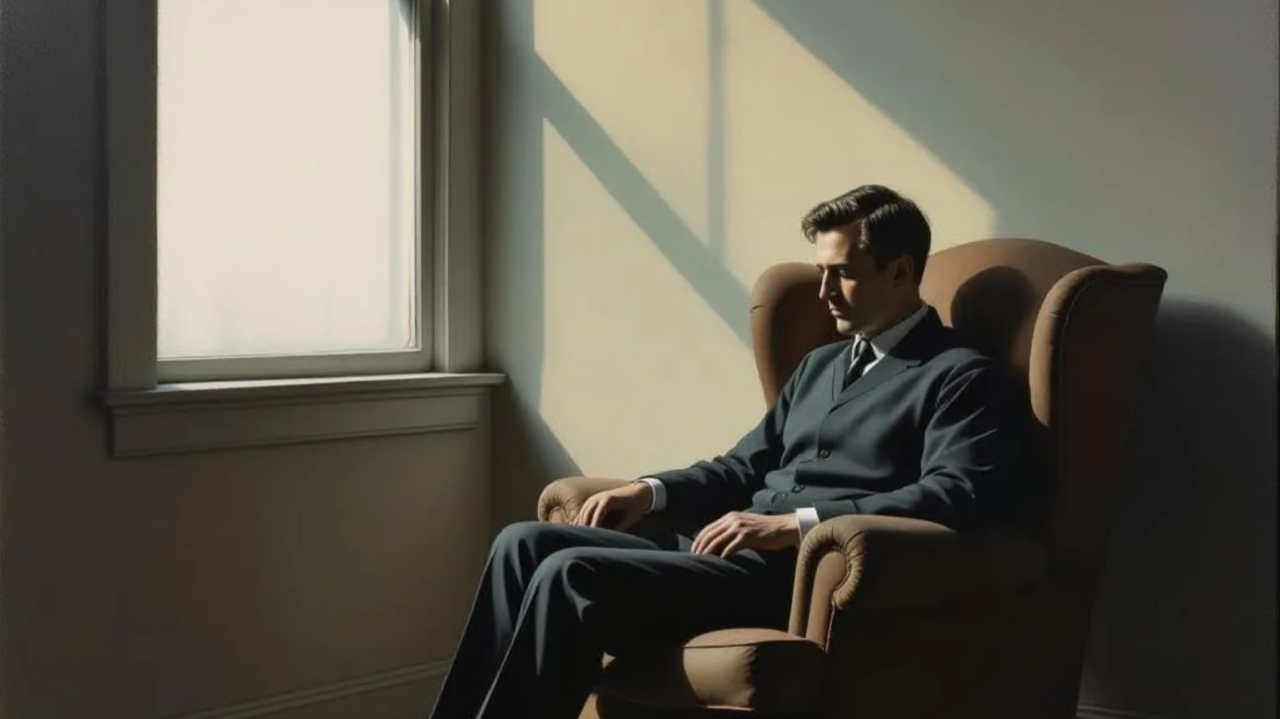
In defence of boredom
Boredom often seems like a problem we need to solve right away. It feels as urgent as fixing a leaky pipe or checking a phone alert. In the past, boredom would show up without warning and stick around. There were no buttons to press or screens to check. People might stare at walls, kick stones, or watch the sky. Back then, boredom was common, and entertainment was rare.
Now, things have changed, and entertainment and distractions are ever-present. We have found ways around having nothing to do since time immemorial. Books, records and music, toys, and screens are all great boredom slayers. Yet, boredom always finds its way in, like a draft through a window that doesn’t quite close. You might notice it, but only after hours of scrolling, when your thumb hurts. And your mind feels both full and empty at the same time. The tension is new, not boredom itself, and is the effect of a world built to get rid of it. This change deeply affects how we notice, handle, and deal with boredom.
I saw this change during a recent visit to my parents.
After dinner, the kids started roaming the house. Not playing. Not fighting. They just drifted from room to room, like satellites that had lost their signal. The grown-ups stayed at the table, locked in conversation. Politics, the weather, and the old classic, how things used to be. The adult trilogy.
Eventually, my son paused in the doorway, looked around, and said what everyone was already thinking.
“I’m bored.”
His words felt like a quiet confession in the room. All the usual screens, TVs, and phones were there. Nothing was actually wrong. Still, boredom showed up, uninvited and without apology. My parents’ house is quite normal, yet filled with glowing distractions and more entertainment than I had as a child. Far more than I ever could have imagined. Yet boredom found him.
That moment stayed with me because it felt rare, not the boredom, but being able to say it out loud. Kids used to announce boredom openly. Now, parents hurry to fix it. Tablets come out, ideas are suggested, and the silence disappears.
Boredom has not disappeared, it has just taken new forms. It no longer means staring at a wall, but opening an app, closing it, opening another, and feeling nothing settle. Endless options bring little enjoyment. We drown boredom in noise, and it floats anyway.
Machines promised to save us from this feeling. Television-filled evenings, video games-filled afternoons, and smartphones filled every gap in between. Music followed us everywhere, a personal soundtrack to daily life. Each invention shaved away another quiet moment. Waiting rooms vanished. Commutes softened. Even bathrooms became content zones. The curse was finally under control.
Yet here we are, more entertained than ever, but still restless. This new boredom is a signal. Our constant activity leaves us unsatisfied because we rarely pause long enough for meaning to surface.
There is a biological angle worth considering. The human brain evolved to seek novelty, but not infinite novelty. Dopamine systems respond to change and anticipation, not constant reward. When stimulation never drops, the signal flattens. This is not philosophy. It is chemistry. The brain needs contrast to feel anything sharply. Without valleys, peaks lose meaning.
That is why boredom matters. It is a crucial contrast. It gives meaning to joy and satisfaction. If we lose boredom, we lose the contrast that makes fulfillment noticeable at all.
Boredom often follows heavy consumption. You finish a show, stop a game, or put down your phone and feel dull emptiness. It’s not sadness, just a quiet gap. Your mind needs rest. Boredom provides it.
I remember my own childhood boredom vividly. Long summers. No plans. A sense of time stretching wide. At the moment, it felt unbearable. In hindsight, those empty hours produced strange and wonderful things. Games invented on the spot. Stories that went nowhere. Ideas that made no sense and still felt urgent. Boredom forced creativity not as a hobby, but as survival.
Today, creativity competes with convenience. It is easier to consume than to create. Easier to scroll than to build. That choice adds up. When boredom arises, we crush it instantly, and we lose the pressure that once pushed us to make things.
The current version of boredom hides inside activity. You sit with your phone, content streaming endlessly, and still feel unsatisfied. That loop can run for hours. You are not bored in the traditional sense. You are under-stimulated, drowning in a sea of stimulation.
You can see this pattern in how we talk about attention. We often blame technology for short attention spans, but the problem is deeper. Our attention isn’t gone, it’s just scattered. It jumps around, looking for something real. Boredom is the quiet feeling underneath all that jumping.
A good example of this is doomscrolling. You keep refreshing your feed, hoping for something new, even though you know it will look the same. Still, you keep going. This is boredom in disguise, lots of action, but nothing really changes.
That is why my son’s statement mattered. He was not scrolling. He was not multitasking. He stood still and named the feeling. That pause created a choice. Boredom could stay. Or it could turn into something else.
We let the boredom stay for a while. No one handed him a tablet or made a plan. He wandered around again, a bit slower. He picked up an old toy and asked an odd question. The evening changed a little. Nothing big happened, and that was the point. It was quiet work. It lowers the noise floor. It invites curiosity back into the room.
Many writers, scientists, and inventors praise boredom. Not as pain, but as space. The mind needs downtime. Neuroscience shows the brain’s default network is active during rest, aiding memory, imagination, and reflection. When you stop feeding your brain, it sorts through what it already knows. That feels like boredom inside.
We treat that feeling as a failure state. It is closer to a loading screen.
Modern life tries hard to get rid of loading screens. Everything is expected to be instant. Streaming services eliminate pauses, and apps preload content. Even short silences feel strange, so we fill them right away. Silence used to mean nothing was happening. Now it feels like something is wrong.
This shift changes how we relate to entertainment. When everything is available at all times, entertainment loses its edge. Waiting once sharpened desire. Anticipation carried weight. You planned around shows. You borrowed books and waited for your turn. The gaps mattered.
I’m not saying we should go back to having less. I like modern comforts, watch shows, and read on screens. Easy access is great. But always avoiding boredom has a cost, as we lose the ability to turn empty moments into new ideas.
The best projects began not with excitement, but with a nagging sense that something was missing. Boredom clarified it. Then ideas appeared, not fully formed, not perfect, but strong enough to follow.
Children still know this instinctively, until we train it out of them. Boredom triggers exploration. Exploration builds skills. Skills lead to confidence. That chain breaks when boredom never completes its cycle.
Leonard Cohen summed this up in his famous song “First We Take Manhattan”:
“The sentence me to twenty years of boredom…”
The line lands hard, framing boredom as punishment. That fits a life starved for meaning. It feels different in one starved for silence.
Boredom isn’t the enemy of meaning. It’s what lets meaning in.
Our devices excel at entertaining us, but not at making us feel satisfied. That’s not a moral issue, it’s just their design. Systems made to grab attention always want to give us more. They don’t know when to stop. People do, or at least, we used to.
The real challenge isn’t getting rid of screens. It’s bringing back contrast. Let boredom happen without trying to fix it right away. Let kids feel it long enough to get creative. Let adults feel it without immediately blocking it out.
This doesn’t need big changes. Small steps matter, like leaving your phone in another room, pausing a conversation, or having an unplanned evening. These gaps might feel awkward at first, but that feeling goes away. Curiosity comes back.
Good entertainment is still important. We still need great TV, good books, and music at the right time. These things stand out more when we’ve been bored. Without boredom, they all start to feel the same.
That night at my parents’ house ended quietly. The kids settled in, and the adults finished their talk. Time passed. Nothing was solved, but something was allowed to happen.
Boredom didn’t ruin the evening. It gave it depth.
We spend a lot of energy trying to escape boredom. The irony is that boredom is one of the few states that still belongs to us. Algorithms predict our tastes. Devices fill our schedules. Boredom arrives uninvited and unsponsored. It asks nothing except patience.
Maybe instead of eliminating boredom, we should respect it. It signals when we need meaning and creates the space for creativity and reflection to arise.
Leonard Cohen described boredom as a sentence, a punishment measured in time. But the truth is, boredom gives us time back, open and unplanned. What we do with that time is still something only people can figure out.
Now, let’s hope for a life sentence for humanity. Interwoven with some TV and good books, of course.